
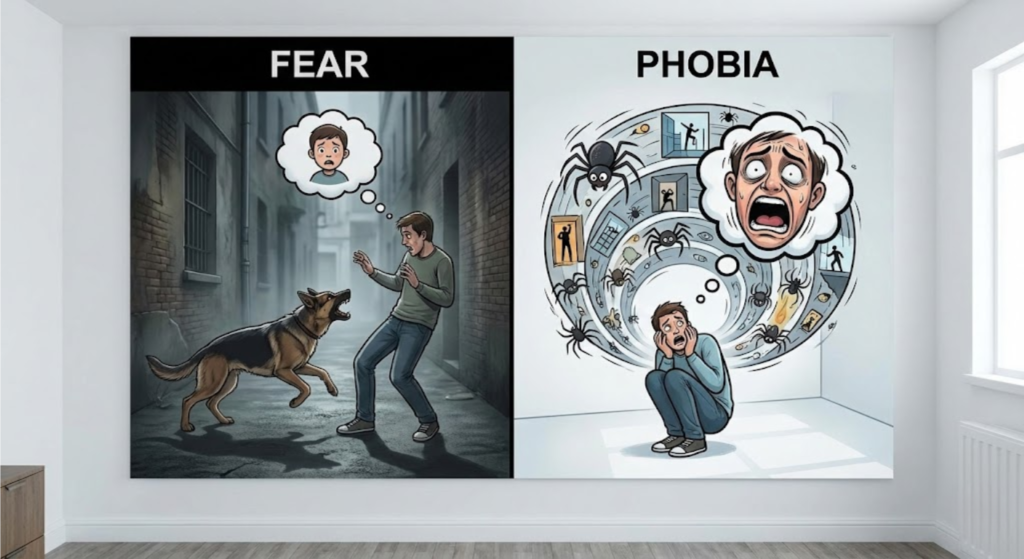
Fear is a natural human emotion that helps protect us from danger. However, when fear becomes intense, irrational, and uncontrollable, it may develop into a phobia. Many people use the terms fear and phobia interchangeably, but they are not the same.
Understanding the difference is essential for proper mental health care.
What Is Fear?
Fear is a normal emotional response to a real or perceived threat. It helps the body prepare for danger and usually disappears once the threat is gone.
Examples of fear include being scared of a loud noise or feeling nervous before an important exam.
What Is a Phobia?
A phobia is an anxiety disorder characterized by an intense and persistent fear of a specific object, situation, or activity that poses little or no actual danger. The fear is excessive and often interferes with daily life.
Key Differences Between Fear and Phobia
1. Intensity
- Fear: Mild to moderate and temporary
- Phobia: Severe, overwhelming, and persistent
2. Control
- Fear: Can usually be managed
- Phobia: Difficult to control despite reassurance
3. Impact on Daily Life
- Fear: Does not significantly affect daily functioning
- Phobia: Leads to avoidance and limits daily activities
4. Duration
- Fear: Short-term
- Phobia: Long-lasting and recurrent
Common Types of Phobias
- Specific phobias: Fear of heights, animals, injections, flying
- Social phobia (Social Anxiety Disorder): Fear of social situations
- Agoraphobia: Fear of crowded or open places
Symptoms of Phobia
- Intense anxiety or panic
- Rapid heartbeat
- Sweating or trembling
- Shortness of breath
- Strong urge to escape the situation
Why Phobias Should Not Be Ignored
Untreated phobias can worsen over time and may lead to panic disorder, depression, or severe avoidance behavior that affects work and relationships.
Treatment Options for Phobias
At Dr. Nirlipta’s Mind Analysis Center, Bhubaneswar, phobias are treated using evidence-based methods such as:
- Detailed psychiatric evaluation
- Psychotherapy (including exposure-based techniques)
- Pharmacotherapy when necessary
- Stress management and relaxation training
- Neuromodulation support in complex cases
When to Seek Professional Help
If fear is intense, irrational, and causes avoidance or panic reactions, consulting a psychiatrist is important for accurate diagnosis and treatment.