
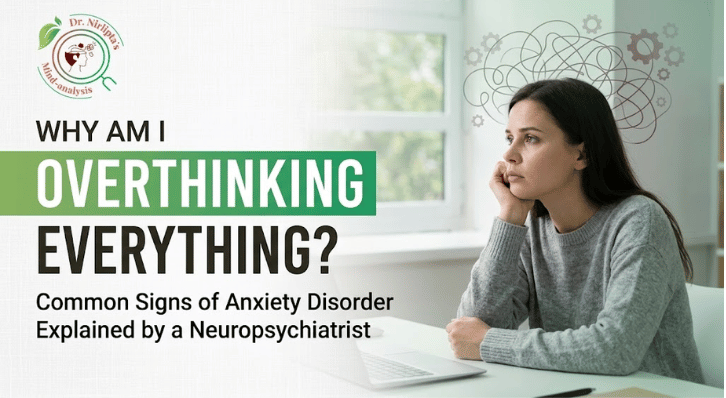
If you constantly ask yourself, “Why am I overthinking everything?”, it may be more than everyday stress. Persistent overthinking, racing thoughts, and excessive worrying are often linked to Anxiety Disorder and other stress-related mental health conditions.
Although occasional worry is normal, anxiety-related overthinking can become emotionally exhausting. As a result, it may affect sleep, concentration, relationships, and daily functioning. Understanding the common signs of anxiety disorder can help individuals recognize when professional support may be helpful.
Search Intent Alignment
Primary Intent: Informational
This article explains how anxiety can contribute to overthinking, emotional distress, and physical symptoms.
Secondary Intent: Commercial Investigation
The content also helps readers understand available treatment approaches such as psychotherapy, counseling, medication management, and psychiatric consultation.
What Is Overthinking?
Overthinking refers to repetitive, excessive thinking about problems, fears, or future situations.
People who overthink may:
- Replay conversations repeatedly
- Imagine worst-case scenarios
- Worry excessively about mistakes
- Struggle to “switch off” thoughts
Additionally, overthinking often increases during stress, uncertainty, or emotional pressure.
However, when overthinking becomes persistent and difficult to control, it may indicate an underlying anxiety disorder.
How Anxiety Disorder Causes Overthinking
Anxiety affects the brain’s stress-response system. Because of this, the mind may stay in a constant state of alertness.
Anxiety Can Trigger:
- Racing thoughts
- Constant worrying
- Fear of negative outcomes
- Difficulty relaxing
Therefore, individuals with anxiety may analyze situations repeatedly, even when there is no immediate danger.
How Anxiety Affects Thoughts and Behavior
When anxiety becomes chronic, the brain may become more sensitive to perceived threats.
This can lead to:
- Mental exhaustion
- Fear-based thinking
- Difficulty concentrating
- Emotional overwhelm
Moreover, overthinking may temporarily feel like “problem-solving,” but it often increases stress instead of reducing it.
Common Signs of Anxiety Disorder
Anxiety symptoms affect both emotional and physical health.
Emotional Symptoms
Common emotional signs include:
- Excessive worrying
- Feeling constantly nervous
- Irritability
- Fearfulness
- Difficulty controlling thoughts
Overthinking and Racing Thoughts
Many individuals describe anxiety as:
- “My mind never stops”
- “I worry about everything”
- “I constantly think about worst-case scenarios”
As a result, emotional fatigue may develop over time.
Physical Symptoms of Anxiety
Anxiety can also affect the body.
Common Physical Symptoms
- Rapid heartbeat
- Muscle tension
- Sweating
- Trembling
- Shortness of breath
- Fatigue
Anxiety and Sleep Problems
Persistent overthinking often affects sleep.
People may experience:
- Difficulty falling asleep
- Waking frequently at night
- Restless sleep due to racing thoughts
Additionally, poor sleep may worsen anxiety symptoms further.
When Overthinking Becomes a Mental Health Concern
Not all overthinking indicates a disorder. However, professional support may be useful if symptoms:
- Persist for weeks or months
- Affect work or studies
- Interfere with relationships
- Cause panic attacks or emotional distress
- Lead to sleep or concentration problems
Therefore, ongoing anxiety symptoms should not be ignored.
Difference Between Stress and Anxiety Disorder
| Stress | Anxiety Disorder |
|---|---|
| Usually linked to a specific situation | May persist even without a clear cause |
| Often temporary | Can become chronic |
| Improves after stress reduces | May continue despite reassurance |
However, only a qualified mental health professional can diagnose anxiety disorders accurately.
Can Overthinking Lead to Panic Attacks?
In some cases, severe anxiety and overthinking may contribute to panic attacks.
Symptoms may include:
- Sudden intense fear
- Chest tightness
- Dizziness
- Rapid breathing
- Feeling out of control
Additionally, panic symptoms may occur unexpectedly and feel physically overwhelming.
Treatment Options for Anxiety Disorder
Anxiety disorders are treatable, and many individuals improve with professional support.
Psychotherapy and Counseling
One evidence-based treatment is Cognitive Behavioral Therapy (CBT).
CBT helps individuals:
- Identify unhealthy thinking patterns
- Reduce excessive worry
- Develop coping strategies
- Manage anxiety triggers
Medication Support
Some individuals may benefit from psychiatric medication, especially when symptoms are severe or persistent.
Medication May Help With:
- Racing thoughts
- Panic symptoms
- Sleep problems
- Chronic anxiety
However, medications should only be prescribed and monitored by qualified professionals.
Lifestyle Support for Anxiety Management
Daily habits can also support recovery.
Helpful Practices Include:
- Maintaining regular sleep routines
- Physical activity
- Limiting excessive caffeine intake
- Relaxation techniques
- Structured stress management
Moreover, combining therapy with healthy lifestyle changes may improve long-term outcomes.
How a Neuropsychiatrist Can Help
A neuropsychiatrist evaluates emotional, cognitive, and behavioral symptoms together.
Professional assessment may include:
- Symptom evaluation
- Anxiety disorder screening
- Sleep and stress assessment
- Personalized treatment planning
Additionally, consultations are generally confidential and tailored to individual needs.
Conclusion
Persistent overthinking and constant worrying can affect emotional wellbeing significantly. Although occasional stress is normal, chronic racing thoughts and anxiety symptoms may indicate an underlying anxiety disorder.
Understanding the connection between overthinking and anxiety helps individuals recognize when professional support may be useful. If symptoms are affecting your daily life, consulting a qualified mental health professional can help you explore appropriate treatment options.
Medical Disclaimer
This article is for educational purposes only and does not replace professional medical advice, diagnosis, or treatment. Always consult a qualified healthcare professional for personalized mental health care.
FAQs Section
1. Why do I overthink everything?
Overthinking may occur due to stress, anxiety, perfectionism, or chronic worry patterns. Persistent overthinking can sometimes indicate an anxiety disorder.
2. Is overthinking a symptom of anxiety disorder?
Yes. Excessive worrying and racing thoughts are common symptoms of anxiety disorders, especially generalized anxiety disorder.
3. Can anxiety cause sleep problems?
Yes. Anxiety often causes difficulty falling asleep, restless sleep, or waking due to racing thoughts.
4. When should I seek help for anxiety?
Professional support may help if anxiety interferes with work, relationships, sleep, or daily functioning.
5. Can therapy help with overthinking?
Yes. Therapies such as CBT can help individuals manage unhealthy thought patterns and reduce anxiety-related overthinking.
6. Is anxiety disorder treatable?
Yes. Many individuals improve with psychotherapy, stress management, lifestyle changes, and sometimes medication.