
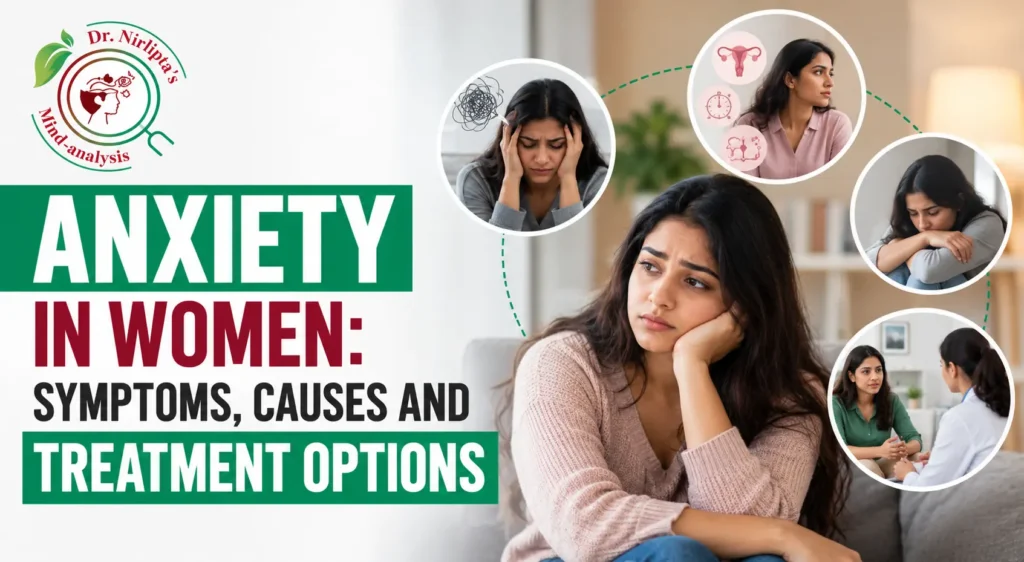
Many women live with constant worry, a racing heart or sleepless nights and assume it is just stress. Sometimes it is. But when these feelings stay for weeks and start affecting daily life, it may be anxiety in women that needs proper attention. The good news is that anxiety is common, well understood, and treatable with the right support.
In this blog, we explain the symptoms, common causes and treatment options in simple language, so you know when to seek help.
What Is Anxiety?
Anxiety is the body’s natural response to stress or danger. A little anxiety before an exam or an interview is normal. It becomes a problem when the fear or worry is too strong, lasts for a long time, or appears even when there is no real danger.
Research shows that women are diagnosed with anxiety more often than men. This is partly because of hormonal changes and the many roles women handle at home, at work and in society. If your worry feels constant and hard to control, it may be a sign of generalized anxiety disorder, one of the most common anxiety conditions.
Common Symptoms of Anxiety in Women
Anxiety symptoms in women are not always the same as what we see in films. Many women hide them, or mistake them for tiredness or “overthinking.” Symptoms usually fall into two groups.
Emotional symptoms
- Constant worry or a feeling that something bad will happen
- Feeling restless, tense or “on edge”
- Irritability and mood swings
- Difficulty concentrating, or the mind going blank
- Fear of being judged or embarrassed in front of others
Physical symptoms
- Fast heartbeat or chest tightness
- Headaches, muscle pain, or tight shoulders and neck
- Stomach problems such as acidity, nausea or loose motions
- Trouble falling asleep or waking up very tired
- Sweating, trembling or feeling dizzy
Sometimes these feelings come in sudden, intense waves with a pounding heart and a feeling of losing control. This can be a panic disorder, and it is more common than most people think. Some women also feel extreme fear in social situations or while speaking in public, which may point to social anxiety disorder.
Causes of Anxiety in Women
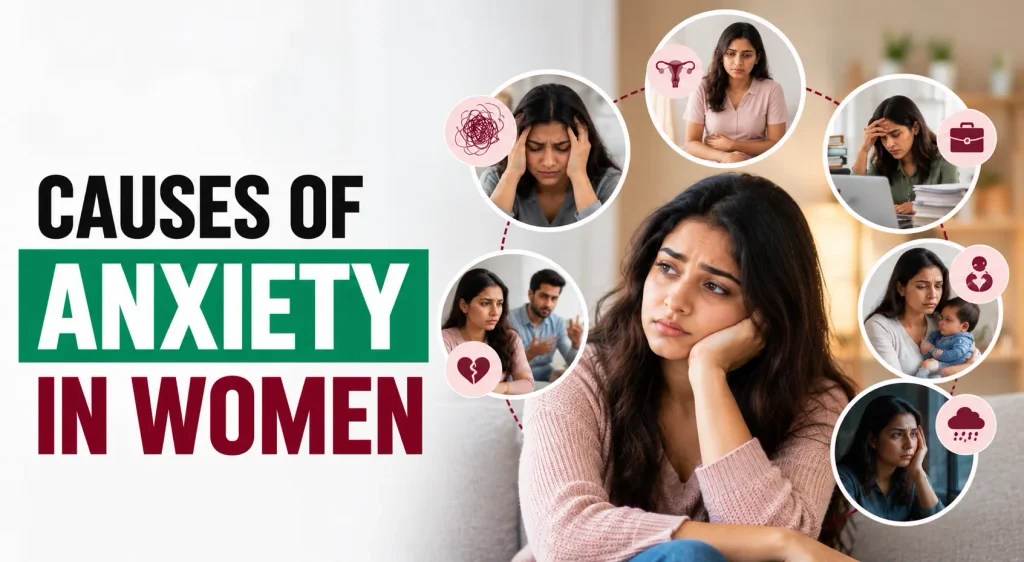
There is rarely one single reason. The causes of anxiety in women usually come from a mix of body, mind and life situations.
1. Hormonal changes
Hormones change through a woman’s life, during periods, pregnancy, after childbirth and around menopause. These shifts can affect mood and make anxiety feel stronger. Many women notice more worry just before their periods or in the months after delivery. To know more about how mental health changes with these life stages, you can read about women’s psychiatry care.
2. Stress and heavy responsibilities
Managing a job, children, household work and family expectations all at once can leave very little time for rest. Over the years, this ongoing pressure can turn into anxiety.
3. Family history and genes
If a close family member has anxiety or depression, the chances of facing it yourself can be higher.
4. Past trauma or difficult experiences
Painful events such as abuse, an accident or a sudden loss can leave deep fear behind. In some women this develops into PTSD, where the mind keeps reliving the event.
5. Other mental health conditions
Anxiety often exists together with other conditions. Many women with long-term low mood also feel anxious, so it is worth understanding the link between anxiety and depression. Repeated unwanted thoughts and habits can also be a sign of obsessive compulsive disorder (OCD).
6. Lifestyle factors
Poor sleep, too much caffeine, skipping meals and no physical activity can make anxiety worse.
When Should You See a Doctor?
Please do not wait if you notice any of these:
- Worry or fear lasts more than a few weeks
- It affects your sleep, work, studies or relationships
- You have frequent panic attacks
- You avoid places or people because of fear
- You feel hopeless or have thoughts of harming yourself
Asking for help is not a weakness. Early support usually makes recovery easier. A trained psychiatrist can understand what you are going through and suggest the right path.
Anxiety Treatment Options for Women
Anxiety treatment for women is always planned around the individual. The doctor considers your symptoms, your life stage and your personal comfort. Common options include:
Talk therapy
Through psychotherapy, you learn to understand your thoughts, handle stress and break the cycle of fear. Cognitive Behavioural Therapy (CBT) is widely used and works well for many people.
Medicines
When symptoms are moderate or severe, a psychiatrist may recommend pharmacotherapy to bring the symptoms under control. These medicines must always be taken under medical guidance, and never started or stopped on your own.
Lifestyle support
Small, steady changes help alongside treatment:
- Sleep at fixed hours every night
- Walk or exercise for 20–30 minutes daily
- Reduce tea, coffee and energy drinks
- Practise slow breathing or meditation
- Talk to someone you trust instead of keeping everything inside
You can see the full range of care available on our treatments page.
Anxiety Is Treatable, and You Are Not Alone
If you are struggling with anxiety, remember that millions of women face the same thing, and many go on to feel calmer and more in control with the right support. If you live in Odisha, you can consult a women psychiatrist in Bhubaneswar , a clinic that offers caring and confidential support. Learn more about the doctor and the clinic on the about us page.
Ready to take the first step? You can book a doctor consultation or contact us to ask your questions.
Disclaimer: This blog is for general awareness only and is not a substitute for professional medical advice, diagnosis or treatment. Please consult a qualified psychiatrist for your individual concerns
FAQs
1. What are the common symptoms of anxiety in women?
Common symptoms include constant worry, restlessness, irritability, difficulty concentrating, a racing heartbeat, muscle tension, stomach problems, sweating, and trouble sleeping. Symptoms can vary from person to person.
2. What causes anxiety in women?
Anxiety can develop due to hormonal changes, ongoing stress, family history, past traumatic experiences, poor sleep, excessive caffeine intake, and other mental health conditions. Often, several factors contribute together.
3. Can hormonal changes cause anxiety in women?
Hormonal changes during menstruation, pregnancy, after childbirth, and menopause may influence mood and anxiety symptoms. Women experiencing persistent or distressing symptoms should consult a qualified healthcare professional.
4. How can I tell if my anxiety needs professional help?
Consider seeking professional help if anxiety persists for several weeks, becomes difficult to control, disrupts sleep or daily activities, causes frequent panic attacks, or leads you to avoid people and situations.
5. What is the difference between anxiety and a panic attack?
Anxiety often involves ongoing worry, fear, or tension. A panic attack is a sudden episode of intense fear that may cause a racing heart, sweating, dizziness, chest discomfort, or a feeling of losing control. Both may require professional assessment.
6. What are the treatment options for anxiety in women?
Treatment may include psychotherapy, such as Cognitive Behavioural Therapy (CBT), medication prescribed by a psychiatrist, and lifestyle changes. The appropriate approach depends on the individual’s symptoms, needs, and medical history.
7. Can lifestyle changes help manage anxiety in women?
Yes. Maintaining a regular sleep schedule, exercising regularly, reducing excessive caffeine intake, practising slow breathing or meditation, and talking to someone you trust may help manage anxiety alongside professional treatment.
8. When should I consult a psychiatrist for anxiety in Bhubaneswar?
You should consider consulting a psychiatrist in Bhubaneswar if anxiety affects your daily life, relationships, sleep, or ability to manage responsibilities. A qualified psychiatrist can assess your symptoms and recommend suitable treatment based on your needs.