
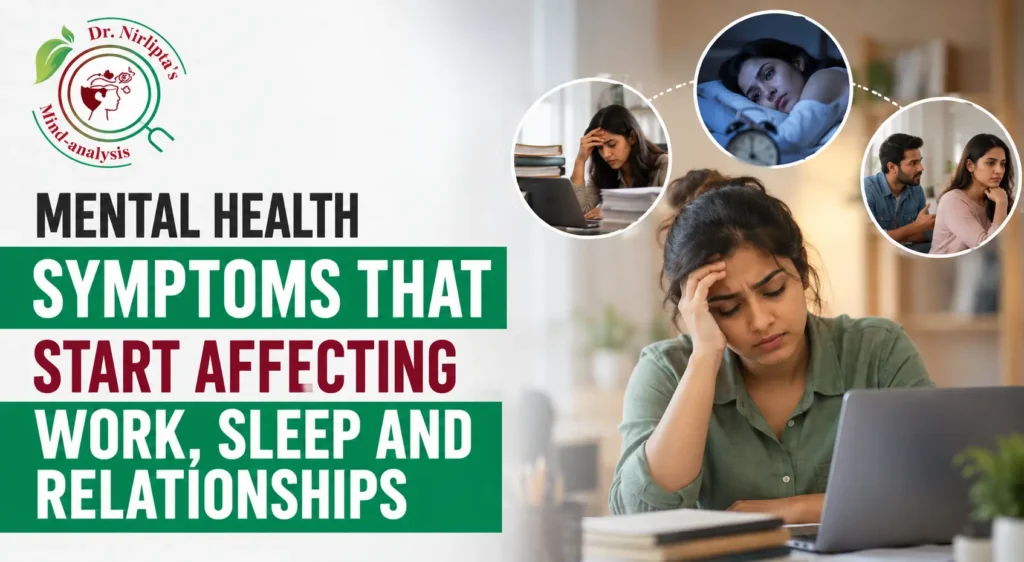
Mental health problems rarely begin with a dramatic event. More often, they creep in quietly. You sleep a little less, you lose focus a little more, you snap at someone you love, and you tell yourself it is just a phase.
But when these small changes continue, they can slowly affect the most important parts of your life. Recognising mental health symptoms early can make a big difference to how quickly you feel better. This article explains how mental health symptoms can affect work, sleep and relationships, and when it may be appropriate to seek professional advice.
How Mental Health Symptoms Affect Your Work
Your job or studies need focus, energy and emotional balance. When your mental health is under strain, these are often the first things to suffer. Signs to look out for:
- Difficulty concentrating or completing tasks
- Making more mistakes than usual
- Missing deadlines or avoiding responsibilities
- Feeling exhausted or “empty” even on easy days
- Dreading work and losing interest in what you once enjoyed
- Fear of speaking up in meetings or being judged by colleagues
Difficulty concentrating, restlessness and problems with organisation can have several causes, and may sometimes be associated with attention-deficit/hyperactivity disorder (ADHD). Similarly, persistent low mood, low energy, hopelessness or loss of interest may be associated with depression. These symptoms alone do not confirm a diagnosis; a qualified professional can assess them in context.
How Mental Health Symptoms Affect Your Sleep
Sleep and mental health are closely connected. Poor mental health disturbs sleep, and poor sleep makes mental health worse, creating a difficult cycle. Common sleep-related symptoms include:
- Lying awake for hours with racing thoughts
- Waking up very early and being unable to fall back asleep
- Sleeping too much and still feeling tired
- Frequent nightmares or disturbed sleep
- Feeling unrefreshed in the morning
Ongoing worry at night is very common in people living with generalized anxiety disorder. On the other hand, people who have lived through a frightening or traumatic experience may suffer from nightmares and sudden alertness, which can be a sign of PTSD.
An occasional poor night’s sleep is common. If sleep difficulties persist, affect your daily activities or occur alongside other mental health symptoms, consider seeking professional advice. You do not need to wait for a particular period if symptoms are severe or concerning.
How Mental Health Symptoms Affect Relationships
Mental health struggles often change the way we connect with others. You may not even notice it, but the people close to you usually do. Warning signs include:
- Becoming irritable, short-tempered or easily upset
- Withdrawing from family and friends
- Avoiding conversations or social gatherings
- Feeling misunderstood or emotionally distant from your partner
- Difficulty trusting others or fear of being abandoned
- Intense emotional reactions that feel hard to control
Intense emotional reactions, fear of rejection and recurring relationship difficulties can have different causes and may sometimes be associated with borderline personality disorder. A professional assessment is needed to understand the underlying concerns. Appropriate treatment and ongoing support may help people manage symptoms and improve day-to-day functioning.
Other Symptoms That Should Not Be Ignored
Some symptoms need prompt attention, even if they seem unusual or frightening:
- Hearing or seeing things that others do not, or strong beliefs that feel unusual to others, which may be associated with schizophrenia
- Feeling detached from yourself or your surroundings, or memory gaps linked to dissociative disorders
- Repeated unwanted thoughts and the urge to perform certain actions again and again, which are characteristic of obsessive compulsive disorder (OCD)
- Thoughts of self-harm or feeling that life is not worth living
If you experience these symptoms, seek professional assessment. If you or someone else may be in immediate danger, or there is an immediate risk of self-harm, contact local emergency services or go to the nearest emergency department. If possible, stay with a trusted person while urgent help is arranged.
Mental Health Symptoms in Different Age Groups
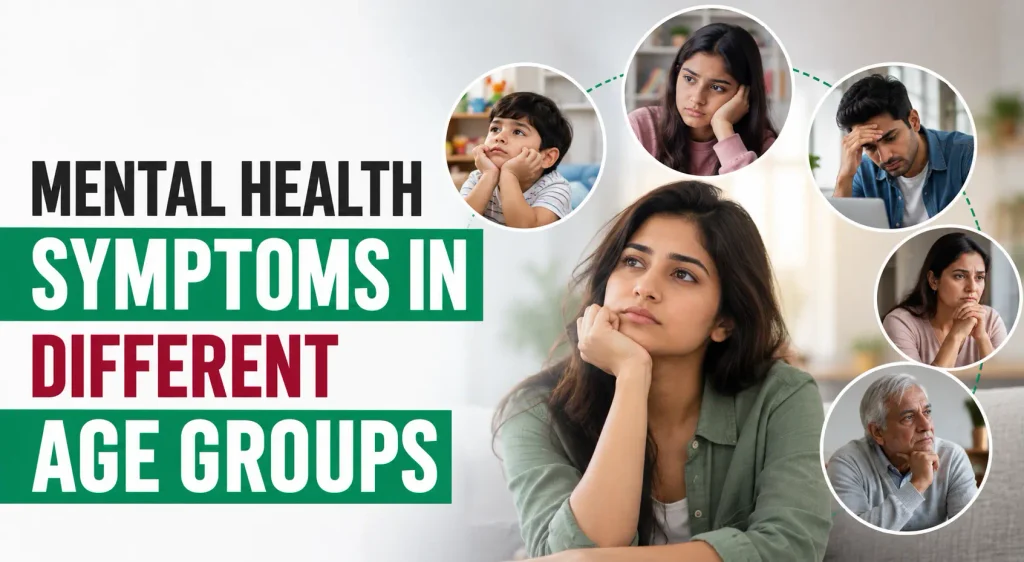
Symptoms can look different depending on age. Children and teenagers may show changes through falling grades, anger, or withdrawal rather than saying they feel sad. Early guidance through child psychiatry and adolescence psychiatry can help young people build healthy emotional habits. In older adults, forgetfulness, confusion and personality changes may need evaluation through geriatric psychiatry or dementia and memory care. Women may also experience emotional changes linked to pregnancy, postpartum or hormonal phases, which are addressed in women’s psychiatry.
When Is It Time to Get Professional Help?
Consider seeing a psychiatrist if:
- Symptoms last longer than two weeks
- They interfere with your job, sleep or relationships
- You rely on alcohol or other substances to cope
- Self-help methods have not worked
- Family or friends have expressed concern
A mental health professional will assess your symptoms, understand your history and recommend suitable treatments. The plan may include talk therapy, medication, lifestyle guidance or a combination, depending on what you need. You can discuss your concerns with a qualified mental health professional, who can assess your symptoms and explain suitable next steps. The choice of professional support will depend on your concerns, preferences and clinical needs.
Small Steps You Can Start Today
While you plan to seek help, these small steps may support you:
- Keep a regular sleep and wake-up time
- Write down your symptoms and when they happen
- Share how you feel with one trusted person
- Reduce caffeine, alcohol and late-night screen use
- Stay physically active, even with a short daily walk
Final Thoughts
Mental health symptoms are not a weakness, and they are not something you must handle alone. When they start affecting your work, sleep and relationships, they are a signal that your mind needs care, just like your body does after an injury.
Mental health symptoms are not a personal weakness, and support is available. If changes in your mood, sleep, concentration or relationships are affecting daily life, consider speaking with a qualified mental health professional. Seeking advice can help you understand your concerns and explore appropriate options for care.
Disclaimer: This article is for educational purposes only and does not replace professional medical advice, diagnosis or treatment. If you or someone you know is in crisis or thinking about self-harm, please contact emergency services or a mental health helpline immediately.
FAQs:
1. What are the early symptoms of mental health problems?
Early symptoms include persistent sadness, excessive worry, mood changes, poor concentration, sleep problems, irritability, low energy and pulling away from family and friends.
2. Can mental health problems affect sleep?
Yes. Anxiety, depression and trauma can cause trouble falling asleep, early waking, nightmares or oversleeping. Poor sleep can also worsen mental health, creating a repeating cycle. Nightmares after a frightening event may be linked to PTSD.
3. How does mental health affect work performance?
It can reduce focus, memory and motivation, leading to more mistakes, missed deadlines, burnout and fear of speaking up. Persistent restlessness and disorganisation may sometimes be linked to ADHD.
4. How can mental health problems affect relationships?
They can cause irritability, emotional distance, avoiding conversations, trust issues and strong emotional reactions. Loved ones often notice these changes before the person does.
5. When do mental health symptoms need professional help?
Seek help if symptoms last more than two weeks, interfere with work, sleep or relationships, or if you depend on alcohol or other substances to cope.
6. Is it normal to feel mentally exhausted all the time?
Occasional tiredness is normal, but constant mental exhaustion with low mood, poor sleep or loss of interest may point to depression, anxiety or burnout.